Pest Control Service Goldsboro property owners rely on delivers immediate, pet-safe pest eradication to safeguard residences and commercial facilities throughout Wayne County. When searching for reliable pest control near me, homeowners need rapid diagnostic inspections and decisive treatment plans without aggressive long-term subscription mandates.

Pest Control Service in Goldsboro is a specialized environmental management service that inspects residential and commercial structures, eliminates active insect and rodent infestations, and installs physical exclusion barriers to protect Wayne County properties from biological contamination and structural timber damage.
Every service reflects the same meticulous attention to detail — whether it's a single job or a larger pest control service project across Goldsboro.
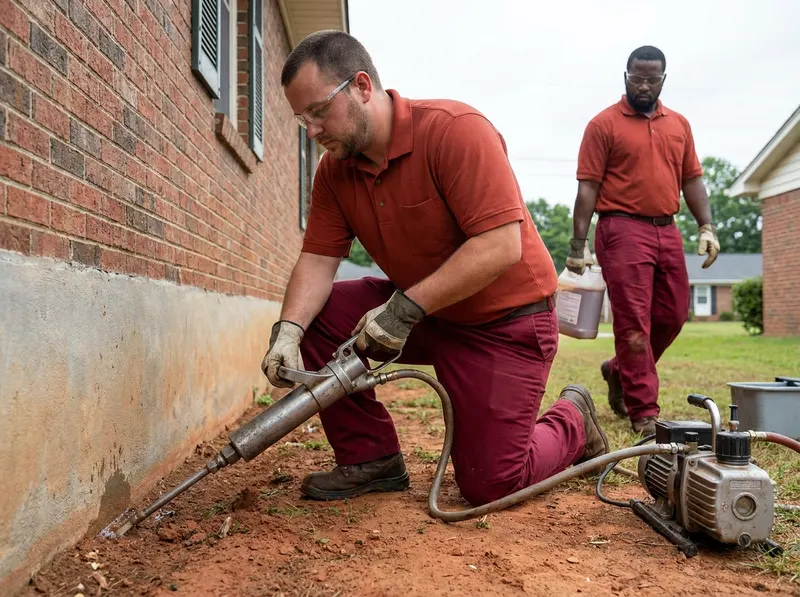
Subterranean termites represent the most destructive structural wood pest in eastern North Carolina due to the region's warm climate and sandy loam soil profiles. Technicians execute comprehensive exterior foundation trenching, treating the soil perimeter with non-repellent liquid termiticides such as fipronil to establish an unbroken chemical defense zone. In addition, technicians core-drill attached slab patios, inject expansion joints, and install low-profile in-ground monitoring and bait stations every ten to fifteen linear feet. This systematic approach eliminates entire foraging colonies through horizontal transfer before worker termites can compromise structural floor joists, wall studs, or subflooring.
View details →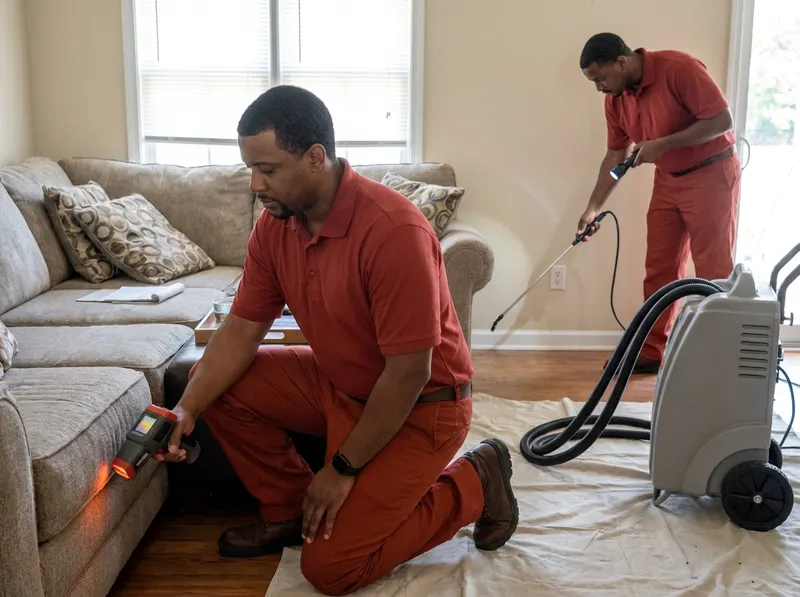
Bed bug infestations spread rapidly through multi-room residential dwellings, rental properties, and hospitality facilities, embedding deep within mattress seams, box springs, headboards, baseboards, and electrical outlet boxes. Extermination protocols deploy commercial high-temperature convective heat equipment to raise structural target zones above lethal thermal thresholds, effectively killing all life stages including heat-resistant eggs and nymphs in a single application. Field specialists supplement heat treatments with precision applications of microencapsulated residual formulations and desiccant dusts in structural wall voids, ensuring extended protective defense against re-infestation without creating hazardous chemical residues.
View details →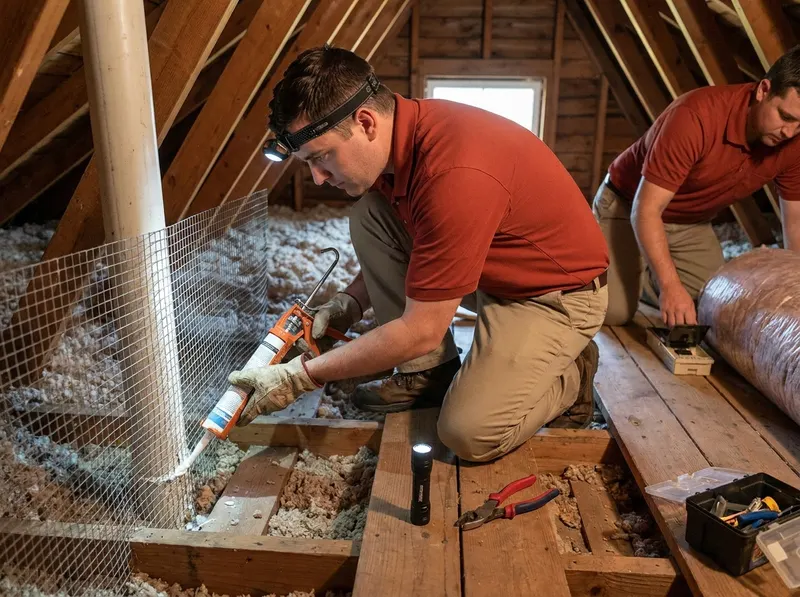
Norway rats, roof rats, and house mice exploit roof transitions, unsealed foundation vents, plumbing chases, and crawl space gaps to nest inside residential attics and crawl spaces. Technicians conduct complete exterior envelope inspections to identify all ingress gaps larger than one-quarter inch, sealing voids permanently using heavy-gauge welded wire mesh, copper wire packing, and elastomeric silicone sealants. Inside the structure, specialized mechanical trapping lines rapidly remove the resident rodent population, followed by targeted removal of contaminated insulation, localized enzymatic waste sanitization, and deodorization to eliminate biological pheromone trails.
View details →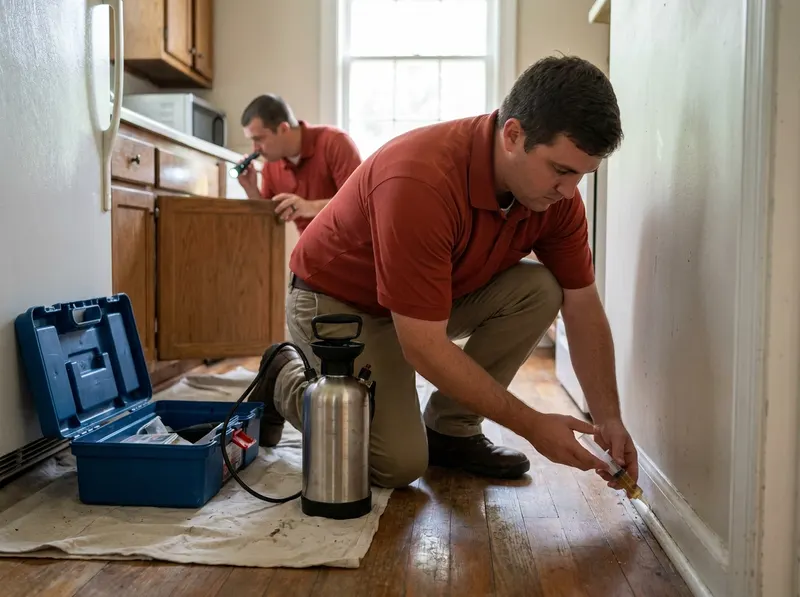
German, American, and Oriental cockroaches present severe indoor sanitation risks by contaminating food preparation surfaces, triggering respiratory allergies, and nesting within appliance motor housings and plumbing wall voids. Eradication plans deploy targeted insect growth regulators (IGRs) to arrest insect reproductive cycles, paired with high-attractant bait matrices applied directly to harborage voids. Technicians apply non-repellent residual perimeter barriers along interior baseboards and exterior foundation thresholds, eradicating established crawling insect populations while preventing exterior moisture-seeking pests from migrating indoors.
View details →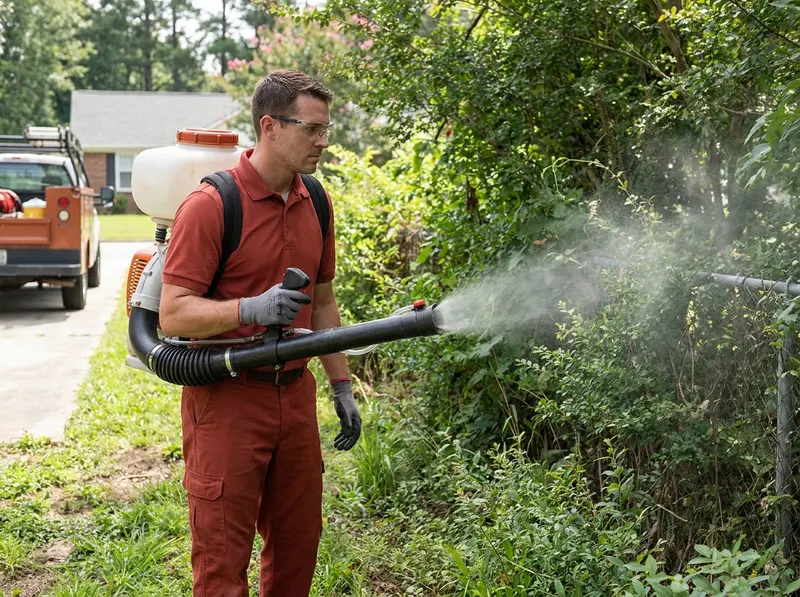
Warm temperatures and high ambient humidity across the Neuse River basin create expansive breeding zones for Asian tiger mosquitoes and native vector species. Outdoor suppression protocols utilize ultra-low-volume (ULV) backpack misting systems to apply microencapsulated botanical adulticides directly to the undersides of dense foliage, tree canopies, ground covers, and shaded structural overhangs where adult mosquitoes harbor during daylight hours. Technicians simultaneously identify standing water reservoirs, applying biological larvicides containing Bacillus thuringiensis israelensis (BTI) to birdbaths, landscape low spots, and drainage ditches to interrupt larval development before biting adults emerge.
View details →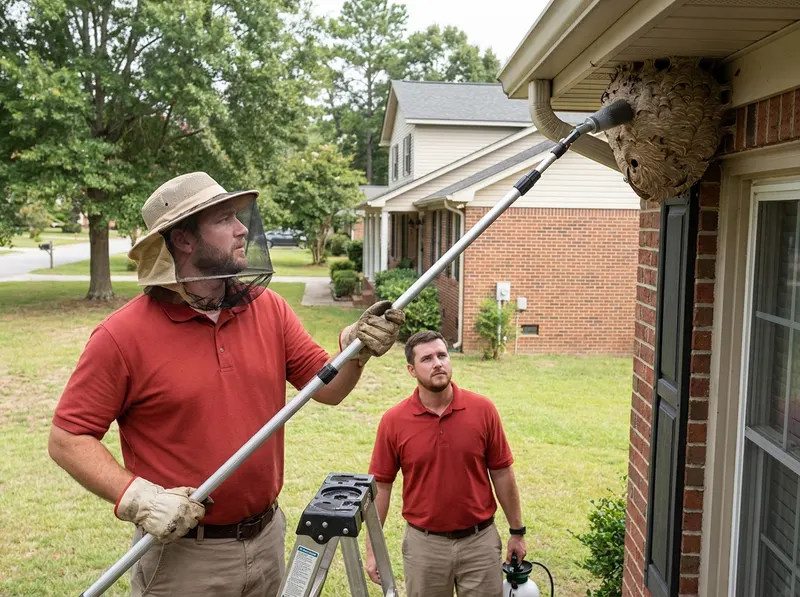
Bald-faced hornets, paper wasps, yellowjackets, and carpenter bees construct hazardous nests beneath roof eaves, structural fascia, window frames, decks, and subterranean ground cavities. Protective-suited technicians perform targeted chemical knockdown injections directly into active nesting structures using pressurized aerosol formulations and specialized residual dusts. Once active insect flight and defensive activity cease, technicians physically scrape, detach, and remove the nests, followed by treating the anchoring surface with repellent deterrents to prevent secondary queens from establishing replacement colonies on the same structural anchor points.
View details →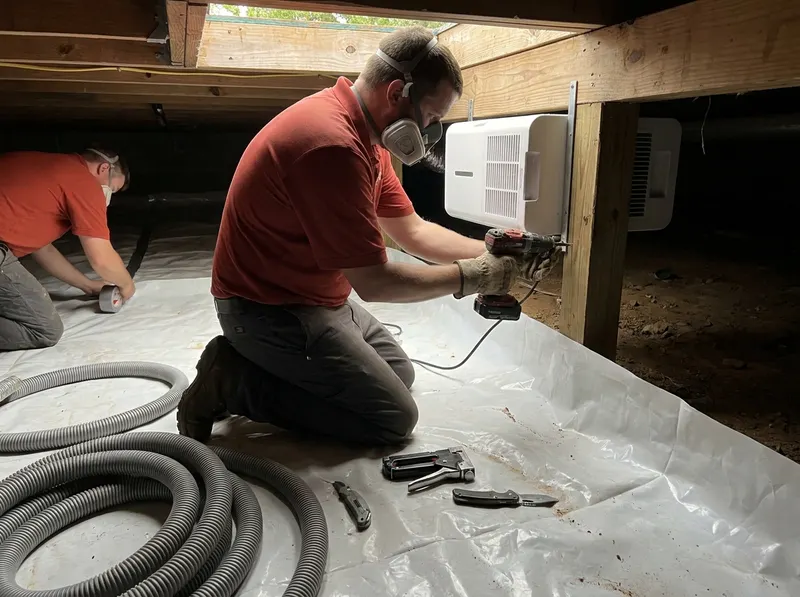
Excess moisture in vented dirt crawl spaces attracts subterranean termites, wood-boring powderpost beetles, camel crickets, and silverfish, while accelerating wood rot and mold development. Technicians install heavy 12-to-20 mil reinforced vapor barriers across exposed soil, seal crawl space foundation vents, insulate perimeter masonry walls, and integrate commercial dehumidification units to maintain structural relative humidity below 55 percent. Controlling sub-structure humidity eliminates the biological moisture source required by wood-destroying organisms, permanently protecting structural floor framing and improving interior air quality.
View details →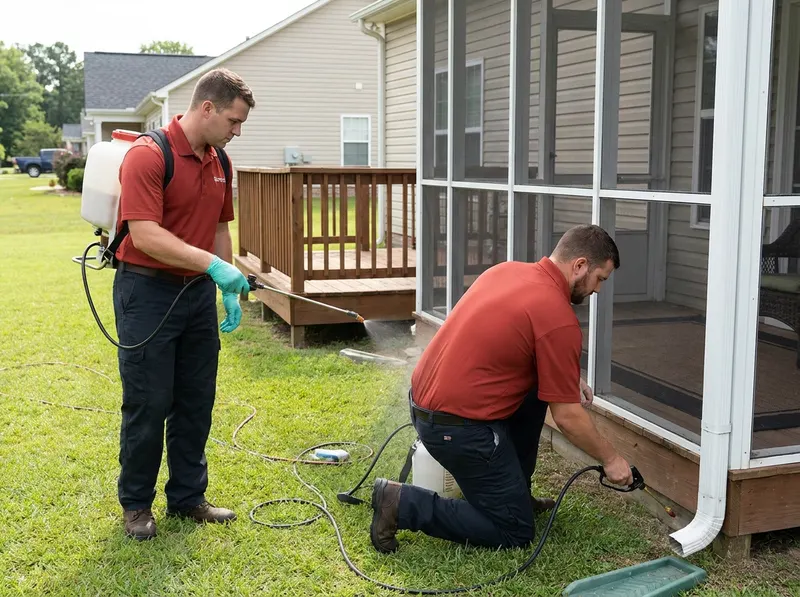
Fleas and brown dog ticks establish rapid infestations in residential turfgrass, crawl spaces, and indoor carpeting, posing direct health and comfort threats to family pets and human occupants. Extermination protocols coordinate dual-phase indoor and outdoor treatments: technicians treat lawn perimeters and shaded pet resting zones with specialized photostable adulticides and insect growth regulators, while indoor living areas receive fine-particle residual broadcast applications targeting carpet fibers, baseboard cracks, and upholstered furniture seams to eradicate both active biting adults and emerging pupae.
View details →Pest Control Service in Goldsboro is a specialized environmental management service that inspects residential and commercial structures, eliminates active insect and rodent infestations, and installs physical exclusion barriers to protect Wayne County properties from biological contamination and structural timber damage.
You get a firm, itemized quote for your pest control service before any work begins — no surprises, no pressure.
Careful prep, tidy work, and a full cleanup when we are done. We treat your home and belongings like our own.
The same trusted, background-checked team from the first call to the final check.
If a structure exhibits subterranean termite mud tubes along foundation stem walls or hollowed wood framing, choose a continuous liquid non-repellent soil barrier paired with in-ground hexaflumuron bait monitoring stations rather than superficial spot treatments or generic surface sprays. If an attic, soffit, or crawl space produces nocturnal scratching noises, chewed wiring insulation, or droppings, choose mechanical snap-trapping and directional capture runs combined with complete copper mesh and silicone physical exclusion sealing instead of open broadcast rodenticide baits. If a residential property experiences severe German cockroach or bed bug activity inside interior living zones, choose precision microencapsulated non-repellent residual applications and insect growth regulators combined with focused thermal knockdown rather than over-the-counter aerosol foggers. The primary trade-off centers on upfront diagnostic investment versus ongoing structural risk: comprehensive physical exclusion and targeted subterranean chemical barriers require higher initial labor and specialized application equipment, but they physically prevent recurrent colony entry and structural wood failure; conversely, superficial broadcast sprays and poison baits offer lower initial expenditure and rapid surface knockdown but leave hidden void harborage intact and foundational entryways vulnerable to seasonal pest reinvasion.
Every project gets a firm, written price after a free on-site visit. Ranges below for orientation.
Tell us about your pest control service job and we'll send a clear, written quote — usually the same day. Or just call and talk to a real Goldsboro pro.
(919) 583-6004
Goldsboro properties face distinct environmental pest pressures stemming from the low-lying topography, sandy loam soil, and elevated groundwater tables characteristic of the Neuse River basin and Wayne County. Residential and commercial structures situated along major transit corridors such as US-70, Berkeley Boulevard, East Ash Street, and North William Street regularly experience localized subterranean termite swarming between March and May, driven by high humidity and warm spring rains. Neighborhoods adjacent to Seymour Johnson Air Force Base, Cliffs of the Neuse State Park, Waynesborough Historical Village, Herman Park, and Wayne Community College frequently encounter surges in rodent migrations and roach movement when seasonal water tables fluctuate or construction activity disturbs wooded natural harborage. Furthermore, the prevalence of historic pier-and-beam foundations and unsealed crawl spaces throughout older Goldsboro subdivisions allows moisture-seeking pests like camel crickets, carpenter ants, and wood-boring beetles to thrive unchecked. Field technicians calibrate soil barrier depths, crawl space moisture barriers, and exterior foundation exclusion points specifically to withstand local Coastal Plain weather patterns, intense summer heat, and winter pest displacement.
Free estimates for Goldsboro & the surrounding area.
 Osvano Pest Management Company